Powder coating is one of the most durable and versatile finishing solutions available for industrial, architectural, and specialty applications. Known for its long service life, resistance to harsh environments, and environmentally responsible characteristics, powder coating has become a preferred choice across many industries. Automatic Coating Limited (ACL) is a leader in powder coating services in Toronto, delivering custom-engineered solutions that protect assets, enhance appearance, and reduce long-term maintenance costs.
POWDER COATING SERVICES
The Advantages of Powder Coating
Powder coating differs from traditional liquid coatings in that it is applied as a dry, electrostatically charged powder that is cured under heat to form a continuous, durable finish. This process produces coatings that are highly resistant to corrosion, abrasion, chemicals, and ultraviolet exposure.
Because powder coating does not rely on solvents, it generates minimal volatile organic compounds (VOCs), making it an environmentally responsible option. The durability of powder coatings also reduces the need for frequent recoating, further lowering environmental impact and lifecycle costs.
Broad Application Capabilities
ACL’s powder coating services support a wide range of component sizes and industries. From small precision parts to large industrial components weighing up to 10,000 pounds or more, ACL’s facilities are equipped to handle diverse project requirements.
Applications include architectural aluminum, corrosion protection for industrial equipment, decorative finishes, and specialty coatings for demanding environments such as underwater installations, mining operations, and paper mills.
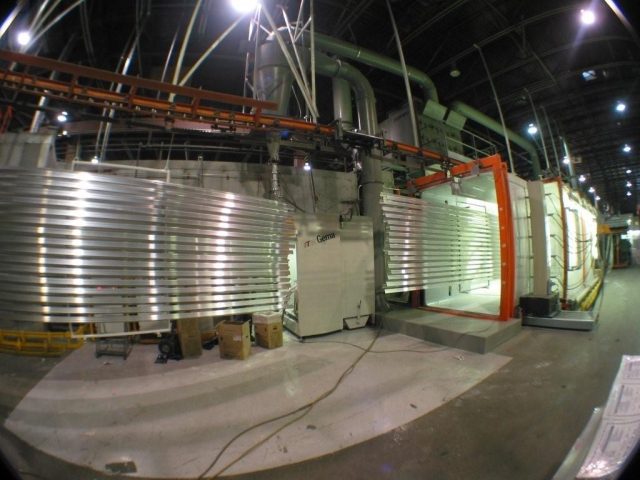
Electrostatic Powder Coating Technology
ACL utilizes advanced electrostatic powder coating systems that ensure uniform coverage and high transfer efficiency. Automated, PLC-controlled equipment with part-scanning technology allows for consistent application across complex geometries and varying production volumes.
Rapid color-change capability enables efficient processing of multiple finishes without compromising quality or turnaround time. This flexibility allows ACL to meet both high-volume production needs and custom, small-batch projects.
Fluid Bed Powder Coating Expertise
ACL is a pioneer in fluid bed powder coating, offering these services since the 1960s. Fluid bed coating involves preheating components and immersing them in a bed of fluidized powder, allowing the coating to melt and bond evenly to the surface.
This method is particularly effective for coating parts with complex shapes, internal surfaces, or heavy-duty performance requirements. ACL’s fluid bed systems are designed to deliver repeatable, high-quality results and can be customized to meet specific customer needs.
World-Class Pretreatment for Lasting Performance
Pretreatment is critical to the success of any powder coating system. ACL employs a wide range of pretreatment processes to ensure optimal adhesion and long-term durability. These include aluminum conversion coating, multi-stage iron and zinc phosphate systems, grit blasting, chemical etching, steam cleaning, and phosphatizing.
Automated wheelabrator systems are used to blast pipes and large components efficiently, ensuring clean, properly profiled surfaces prior to coating application. Project managers carefully evaluate each component to determine the most effective pretreatment approach.
Capacity for Large and Complex Projects
ACL’s conveyor coating lines can accommodate components up to 35 feet long, 8 feet high, and 4 feet wide. Multiple batch systems support oversized or specialized projects, providing flexibility across a wide range of applications.
High-quality spray booths are used for custom projects requiring exceptional finish quality and attention to detail.
Quality Assurance and Consistency
Every powder coating project is supported by strict quality control measures. Coating thickness, adhesion, cure, and appearance are inspected to ensure compliance with specifications and performance expectations. ACL’s ISO-certified quality management system supports consistency and traceability across all operations.
A Reliable Partner in Powder Coating Solutions
Automatic Coating Limited delivers powder coating services that combine durability, efficiency, and environmental responsibility. With advanced equipment, extensive pretreatment capabilities, and decades of expertise, ACL provides coatings that protect assets, enhance performance, and stand the test of time.
FAQ
To protect pipes from corrosion, abrasion, and other types of harm, a protective coating is applied to their surface. It entails applying various coatings, including epoxy, polyethylene, and polyurethane, using a variety of techniques, including spraying, brushing, and dipping.
Pipe coating is a process that coats the surface of a pipe with a protective layer to shield it from corrosion and other types of harm. The following steps are typically included in ACL's (Anti-Corrosion Limited) pipe-coating process:
Surface preparation: The pipe's surface is cleaned and made ready by being free of any rust, grease, or other impurities that could hinder the coating's adhesion.
Pre-heating: To ensure that the coating material will adhere properly, the pipe is pre-heated to a specific temperature.
Application of the coating: Several methods, including rolling, brushing, and spraying, are used to apply the coating material to the pipe's surface.
Curing: Depending on the kind of coating material used, the coated pipe is either exposed to high temperatures or outside air to cure.
To make sure it adheres to the necessary quality standards, the coated pipe is examined.
In order to prevent pipelines from deteriorating and failing due to exposure to harsh environments, anti-corrosion coatings are crucial. The application of an abrasion-resistant, fusion-bonded epoxy coating known as ACL or an Abrasion-Resistant Overcoat Layer is one of the many popular anti-corrosion coating options available.
Here are some explanations for why ACL is a top option for pipe coating:
Superior Corrosion Resistance: ACL protects pipelines from corrosion very well, especially in hostile environments. This coating has a high resistance to substances that cause corrosion, including moisture, chemicals, and other environmental factors.
ACL is specifically created to give the surface of the pipe a high level of abrasion resistance, making it appropriate for use in pipelines exposed to abrasive materials or frequently subject to mechanical impacts.
Thermal Stability: ACL coatings are very heat resistant, making them appropriate for use in pipelines carrying hot gases or fluids.
ACL coatings have a long lifespan, which lessens the need for routine maintenance or repainting. As a result, it offers pipeline operators a cost-effective alternative.
Environmentally Friendly: Since ACL coatings don't contain any solvents, they're a good choice for coating pipelines.
In conclusion, ACL offers excellent corrosion and abrasion resistance, thermal stability, longevity, and environmental friendliness, making it a preferred option for pipe coating.
It is possible to powder coat galvanized steel. An attractive and long-lasting finish is produced by powder coating, a process in which a dry powder is applied to a metal surface and heated. Powder coating can also protect galvanized steel, which has been covered in a layer of zinc to prevent corrosion.
When powder coating galvanized steel, there are a few things to keep in mind. A rough or uneven surface finish may result from a reaction between the powder coating material and the zinc coating on galvanized steel. Galvanized steel must be properly prepared in order to receive a successful powder coating.
A tough and protective finish used on a variety of metal surfaces is powder coating. It's crucial to understand that rust cannot be stopped or prevented from forming on a metal surface by powder coating. In fact, to ensure proper adhesion and performance of the coating, any rust that is present on the metal before powder coating should be removed.
Iron oxide is produced when iron or steel reacts with oxygen and moisture to form rust. Before putting on the powder coating, any rusty metal surfaces need to be thoroughly cleaned and treated. This usually entails mechanically removing the rust through sanding, grinding, or the use of chemical rust converters. after the rust is eliminated
Powder coating is generally not suitable for fiberglass materials. Powder coating relies on heat to melt and fuse the powder particles onto the surface being coated. Fiberglass, being a composite material made of reinforced plastic, can be sensitive to high temperatures.
The high curing temperatures required for powder coating, typically around 300 to 400 degrees Fahrenheit (150 to 200 degrees Celsius), can potentially damage or deform fiberglass. Excessive heat can cause the resin in the fiberglass to soften, leading to warping, bubbling, or distortion of the material.
Instead of powder coating, other coating options are typically used for fiberglass surfaces. These can include gel coating, spray painting, or using specialized coatings designed specifically for fiberglass materials. These alternatives take into account the specific characteristics of fiberglass and provide suitable adhesion and durability without subjecting the material to high temperatures that can cause damage.
We provide full lines of powder coating equipment here at ACL USA, from spray guns to spray booths, ovens, and material handling. Electrostatic spray guns deposit charged powder particles onto surfaces effectively to produce even coat coverage. Spray booths contain the overspray to keep the environment clean and the coating quality superior. Curing ovens supply conditioned heat to cure the powder in a hard, even finish. Moreover, pretreatment machines, including dryers and washers, ready surfaces for better adhesion. Our machines serve numerous industries, including automotive, architectural, and industrial production, with reliable, high-quality finishes. We offer professional assistance in matching equipment with your particular application.
A complete powder coating system includes several essential components designed to produce quality finishes. Our standard setup at ACL USA features a pretreatment station for effective surface preparation, electrostatic spray guns for accurate application, and powder spray booths for effective overspray management. Proper curing ovens are needed for controlled heat treatment in order to gain full adhesion of the powder and effective curing. Material handling systems, such as conveyor belts, also aid in smooth flow in the process. Internal controls manage airflow, powder flow, and temperature for consistency and reliability. We provide robust, easy-to-use powder coating equipment and machinery that provides the highest efficiency, quality, and safety for your coating operations.
Safety considerations play an important role when operating powder coating equipment. Operators are required to don protective equipment such as respirators, gloves, goggles, and static-shedding clothing to avoid exposure to powder particles and static electricity. Clean air in spray booths is maintained through proper ventilation. Equipment must be grounded frequently to minimize the danger of electrostatic discharge. Risks and equipment failure are prevented through frequent maintenance and inspections. They need to be trained in equipment usage, emergency procedures, and safely storing powders. We have stringent safety measures for our equipment and offer comprehensive operation manuals along with constant support to ensure workplace safety.